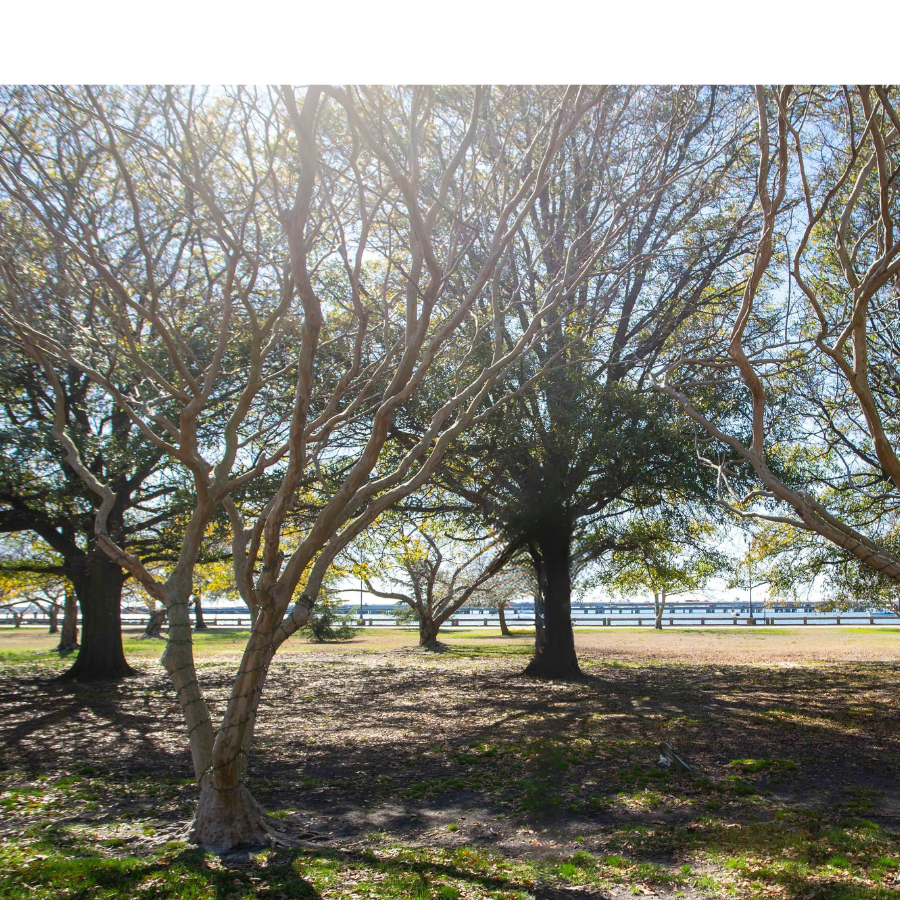
Explore the fascinating historical site of Fort Monroe on you own. You’ll experience the 565-acre landscape’s rich history and culture and can learn more about each of the tour’s 21 stops. Divided into three pathways with the option to walk across the top of the ramparts you’re guaranteed to find something for everyone. The walking tour stops are well marked but not necessarily in chronological order. Some of the sites are also accessible by vehicle.
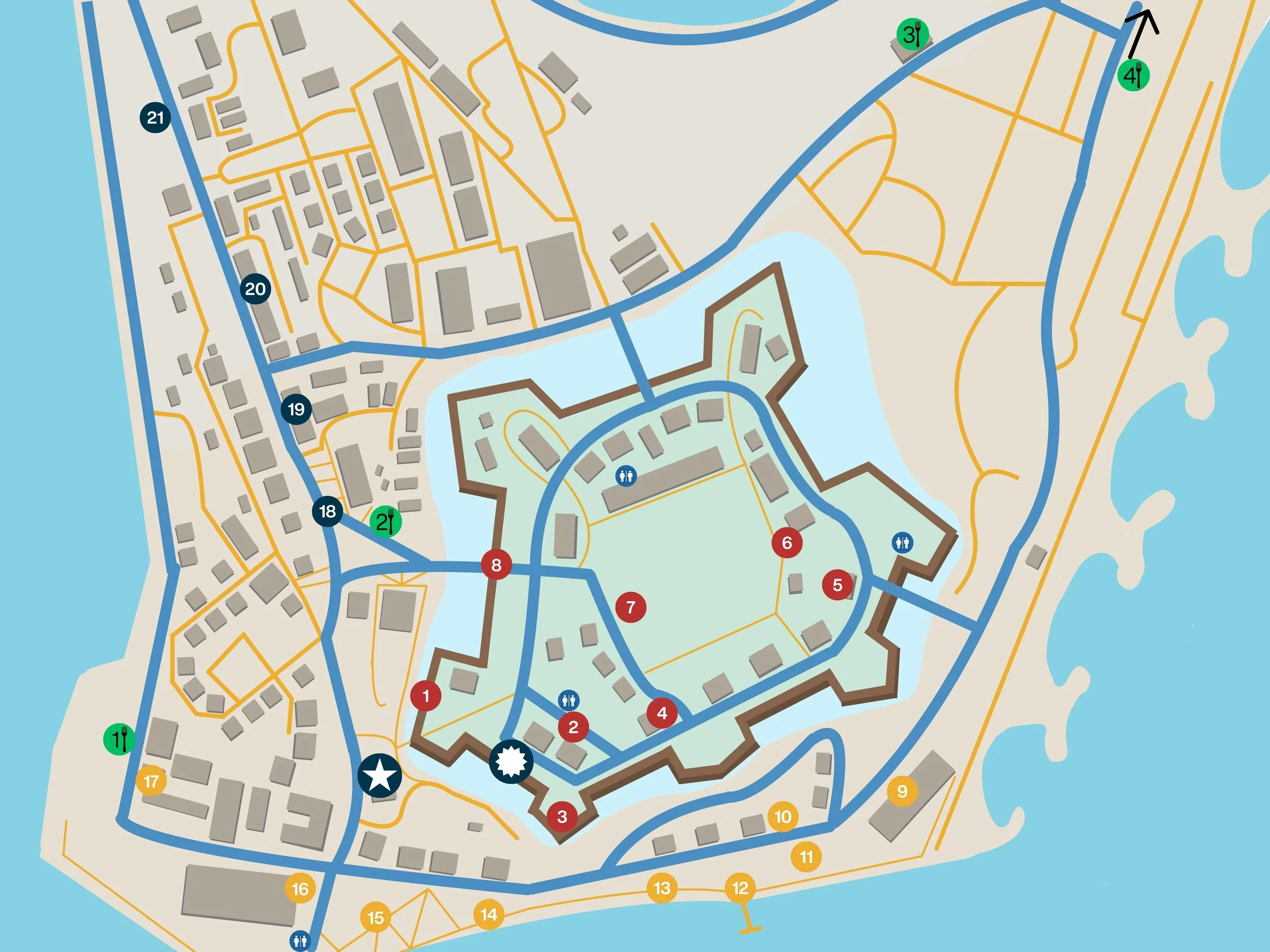
Legend
Bathrooms

Places To Eat
Places To Eat
(Click For Menus)
To visit on foot all 21 historic sites it takes approximately 90-minutes and covers 3.5 miles in distance.
Walking Paths
30-minute loop, accessible via stairs at Stop #1 or steep ramps: uneven ground, multiple types of surfaces, 1.5 miles
Atop The Fort Walls
Stone Fort Path
20-minute loop inside of the fort: level ground, designated walking path, 1 mile
15-minute one directional path from Endicott Era Batteries to Mile Marker Zero: level ground, multiple surfaces, half a mile
Seawall Sights Path
Historic Village Path
15-minute one directional path from Saint Mary Star of the Sea to Contraband Hospital Site: level ground, multiple surfaces, half a mile
Visitor Center

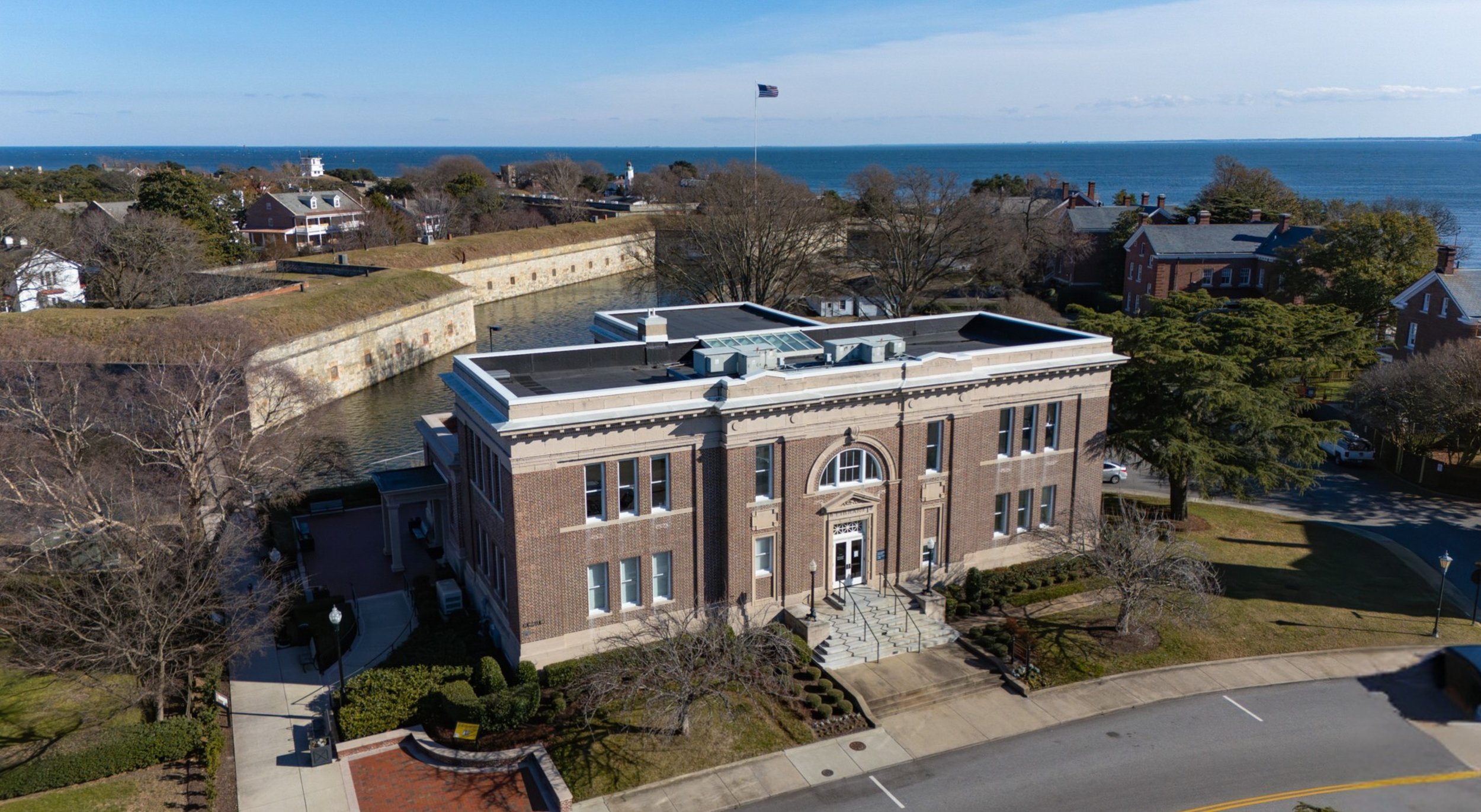
Visitor Center: Once the Coast Artillery School library, today it features exhibits exploring Indigenous culture, the arrival of Europeans and later Africans, the fort’s construction, and role in the Civil War. Visitors will find restrooms, an NPS store, information desk, an interactive map, NPS Junior Ranger Booklets, and can pick up free Casemate Museum tickets.
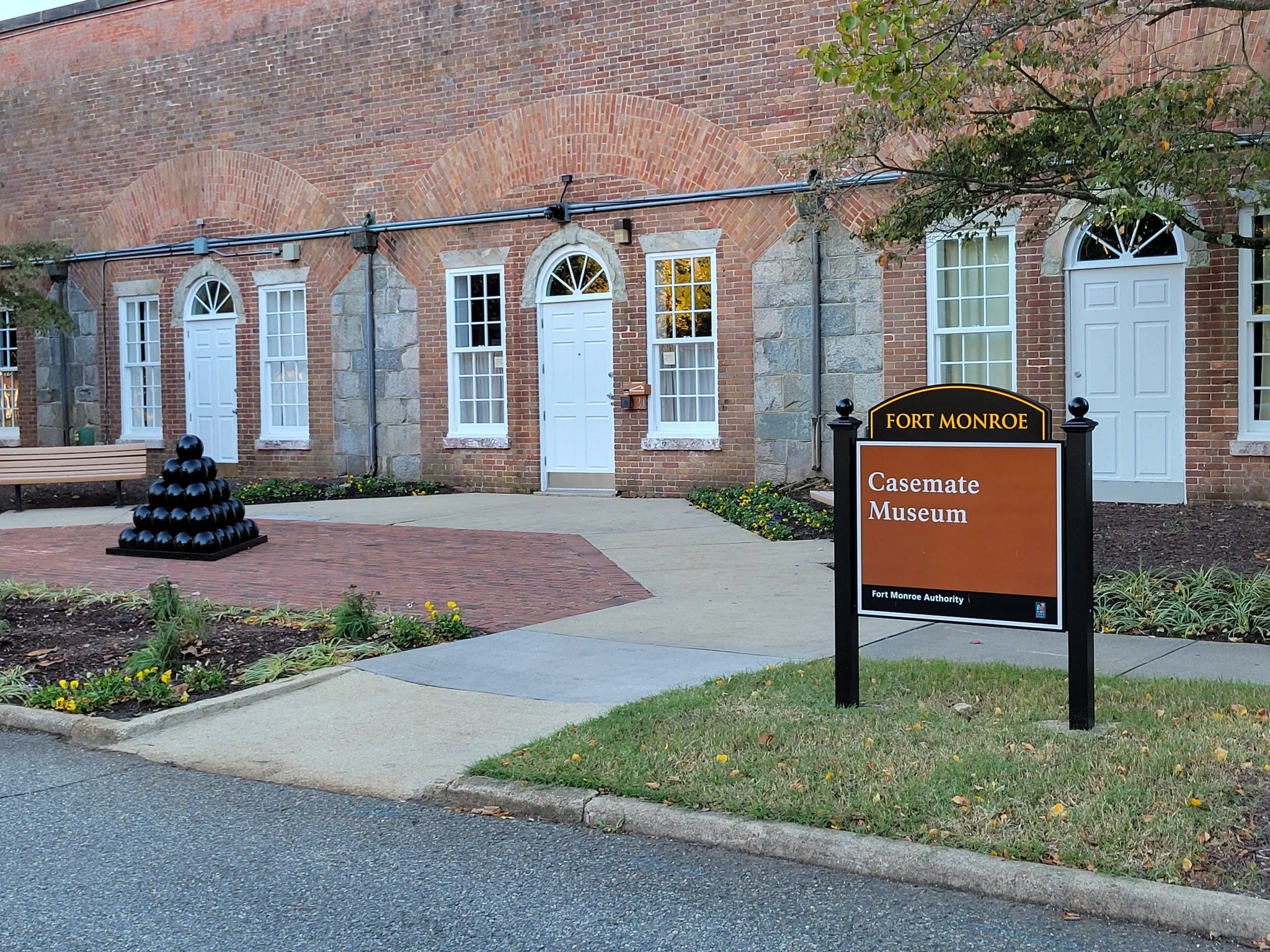
Casemate Museum

Casemate Museum: Located within the fort walls, the museum highlights a topical history of Point Comfort and Fort Monroe. The museum showcases the unique purposes of the casemates through time and the important role Fort Monroe played during the Civil War through the 21st century. Gift Shop and restrooms are available.
Stone Fort Path
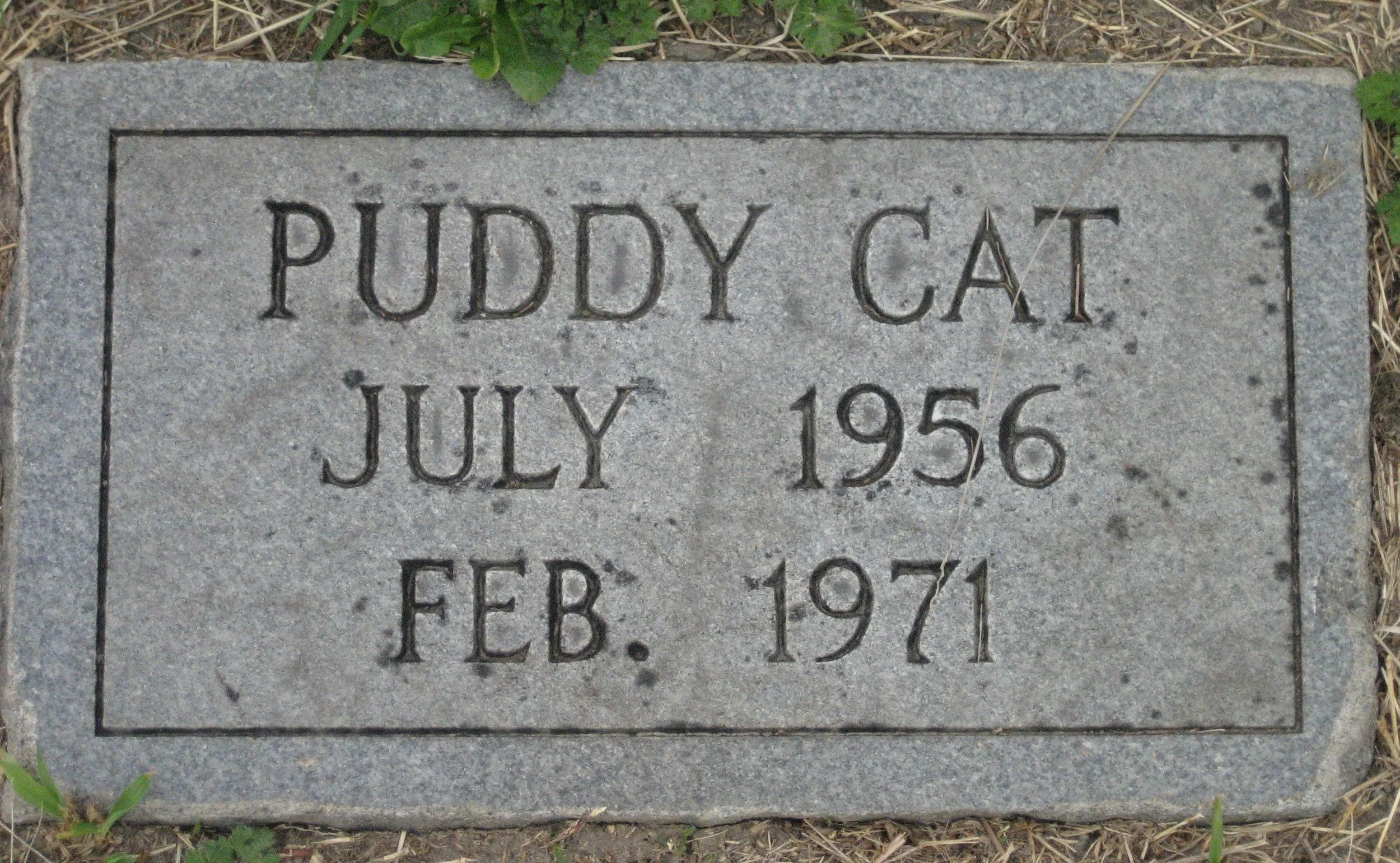
Stop #1 Pet Cemetery
Over 200 recorded graves found atop the ramparts mark the final resting place for U.S. Army working dogs, unit mascots, and pets belonging to military families. The cemetery was officially closed for pet burials in 1988.

Stop #2 Tuileries
Constructed in 1823, it served as quarters for officers, engineers, and their families tasked with the construction of the fort. Known also as Building #17 and Building #18, it now serves as the administrative offices for the Fort Monroe National Monument (NPS).
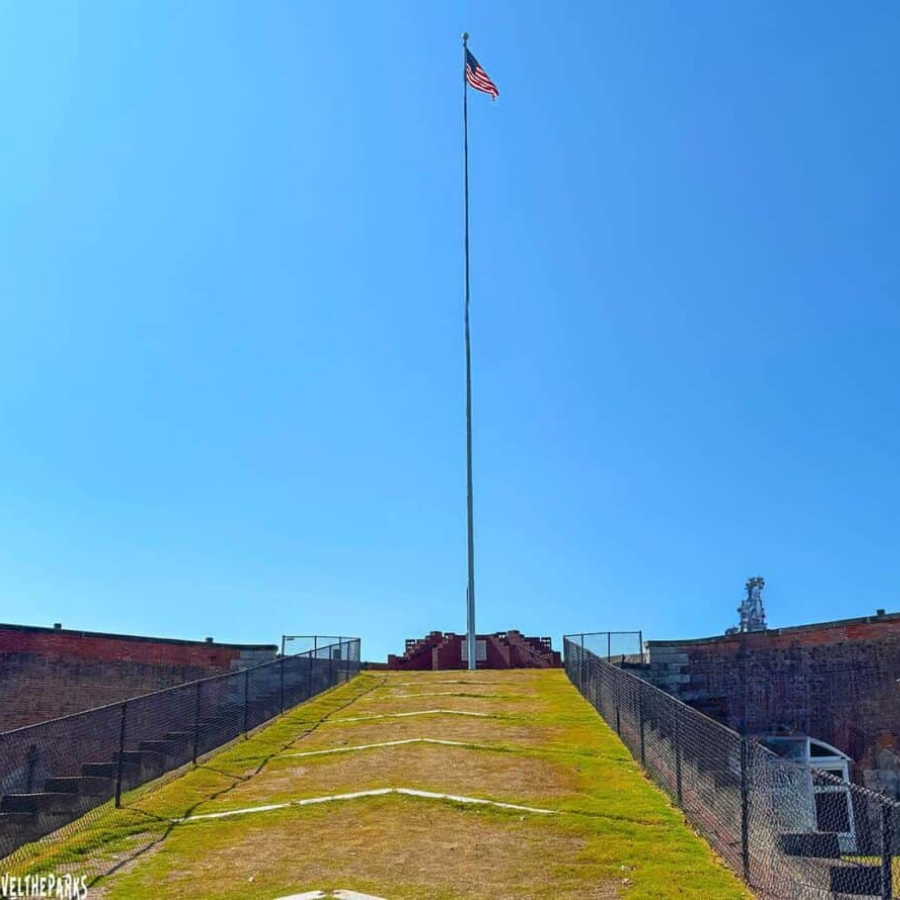
Stop #3 Flagstaff Bastion
A symbol of freedom, the United States flag has flown from the top of the bastion since being built. Fort Wool and the entrance to the Chesapeake Bay are visible from the top marking an important strategic site and maritime location for military and civilian commerce.
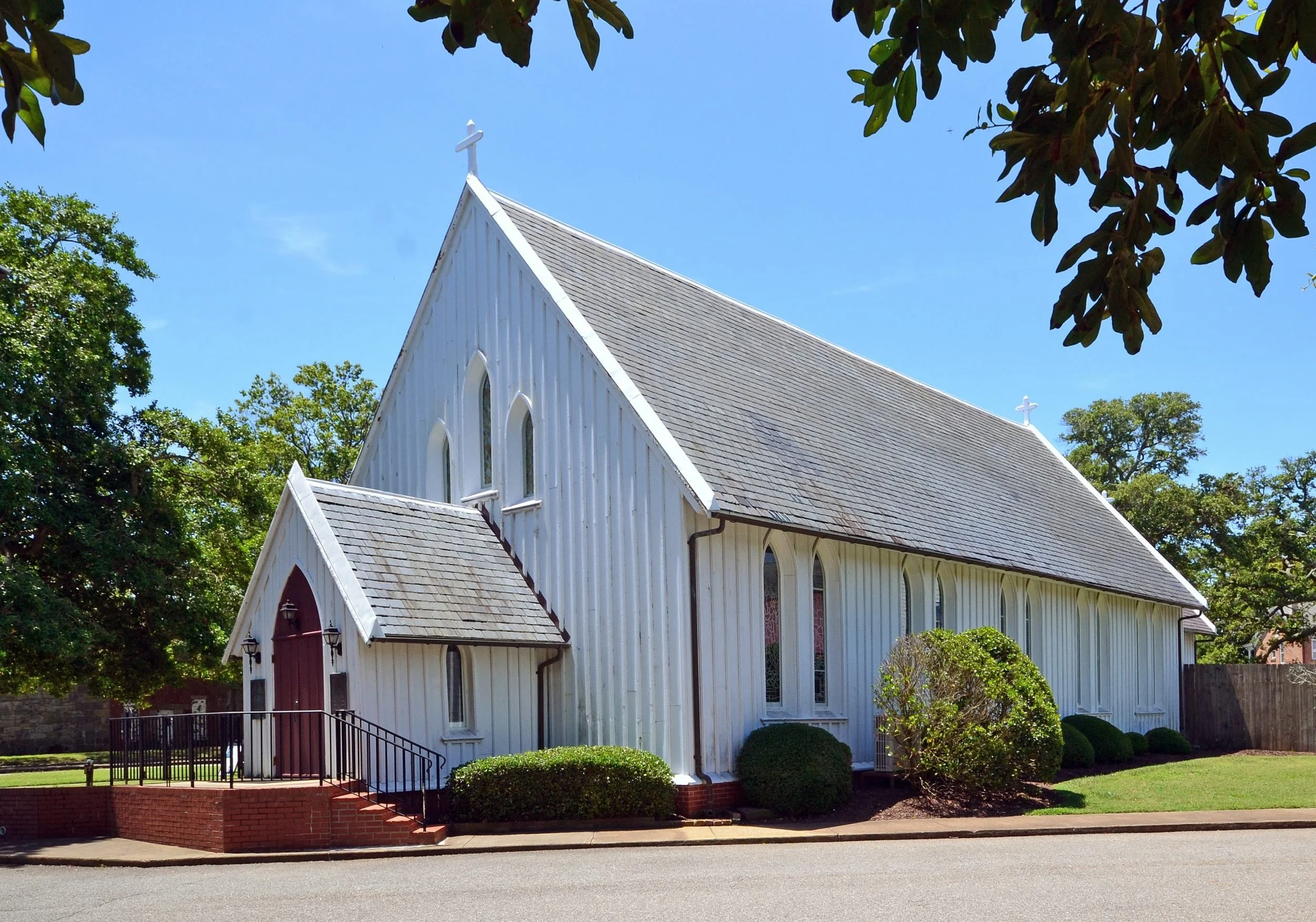
Stop #4 Chapel of the Centurion
Built in 1858 as a tribute to those killed in an explosion, the chapel was an important part of life at the fort. The Army’s Chaplain School was established here and the stain-glass windows are tributes to soldiers, family members, and Army units associated with the fort.
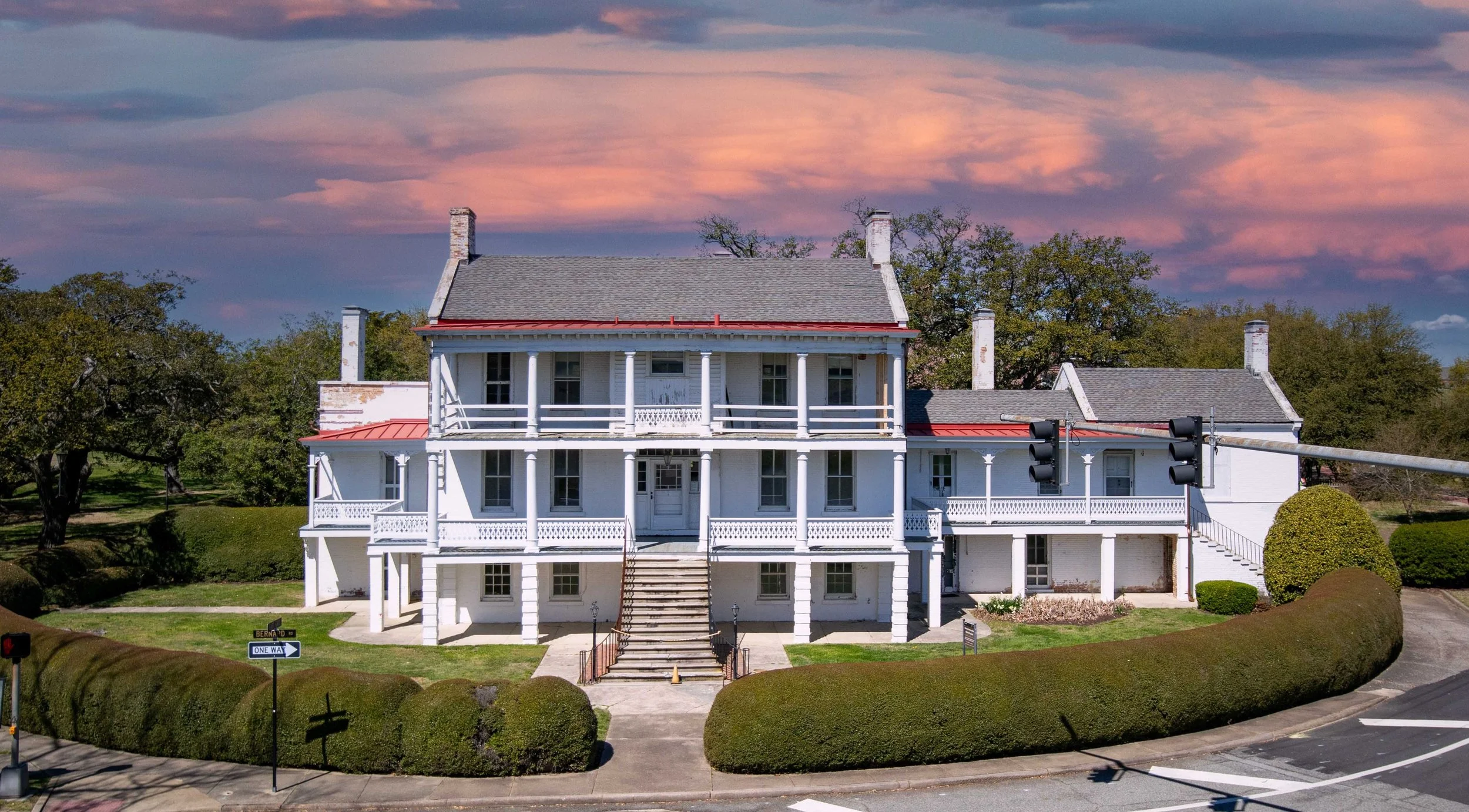
Stop #5 Quarters 1
Constructed in 1819, this building is the oldest structure inside the stone fort. It originally served as the chief engineer’s quarters and later the commanding officer’s quarters. It is where Major General Butler declared three men who escaped slavery as contraband of war.
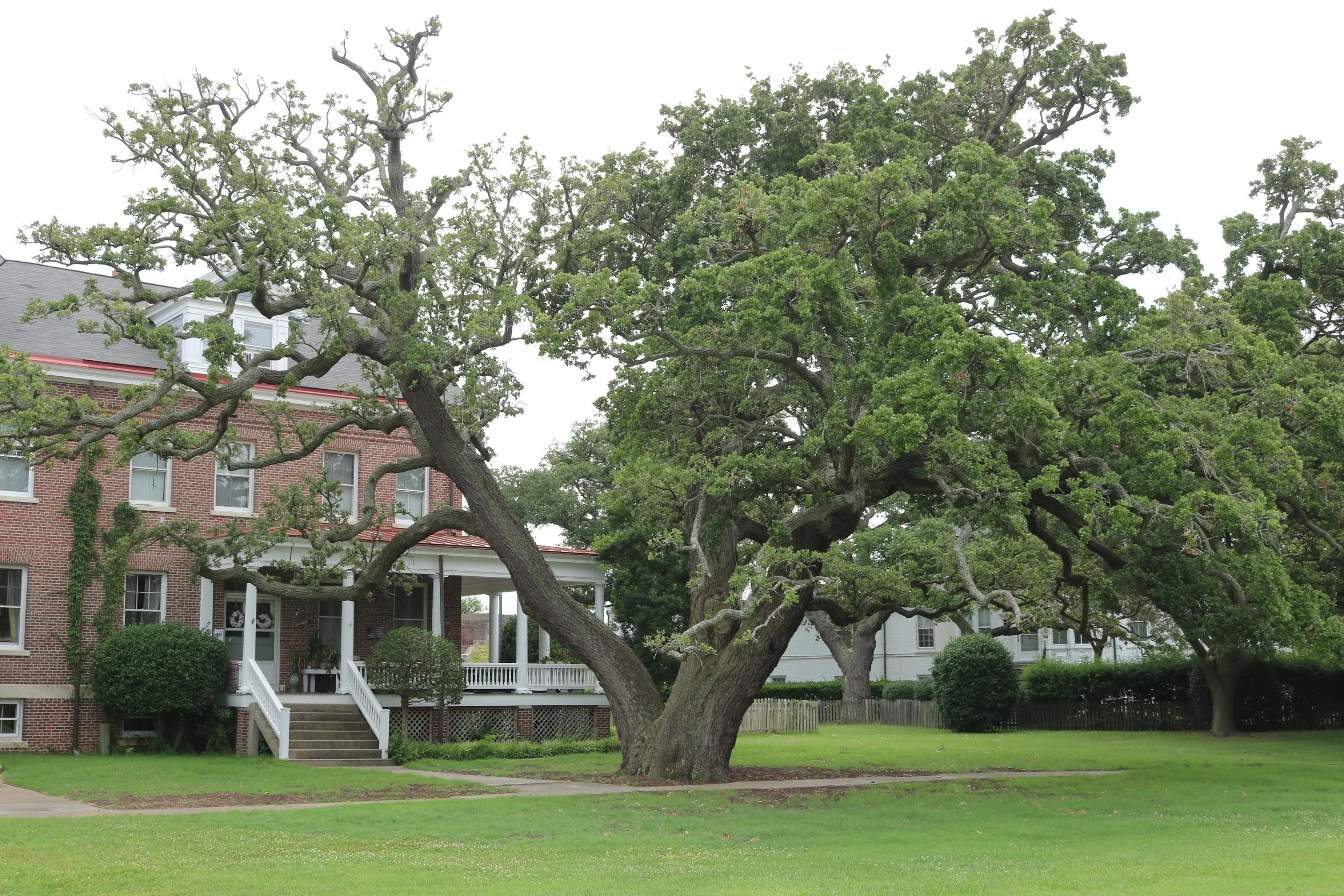
Stop #6 Algernourne Oak
This live oak stands as a witness to the many historical events that took place on this site. Its branches represent the intertwined stories of the people who have happened across this landscape.
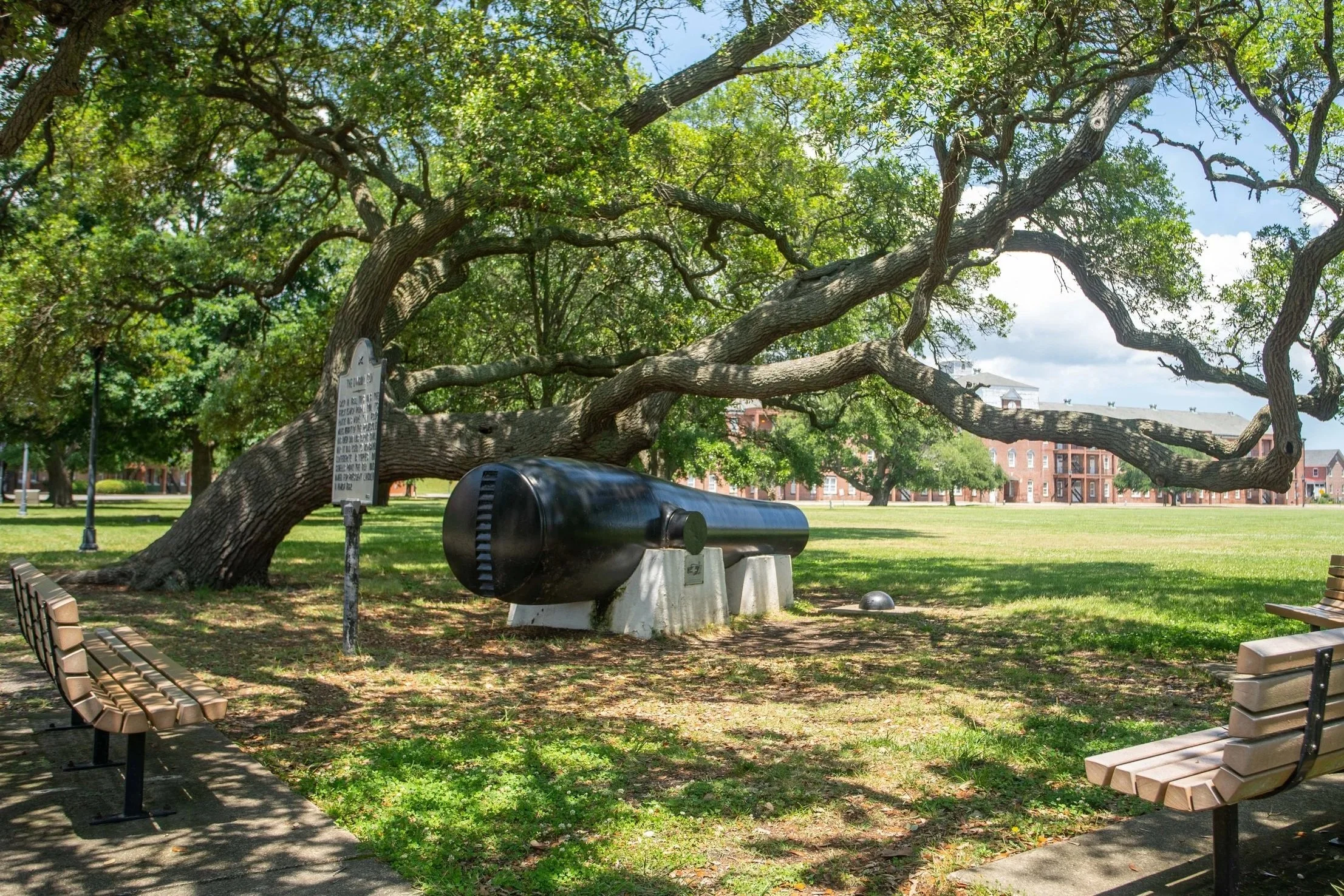
Stop #7 Lincoln Gun
Cast in 1860, this 15-inch Rodman gun was named for President Lincoln in 1862. With a range of over four miles and a projectile weighing 330lbs, this gun was important in the defense of the Union fort during the Civil War.
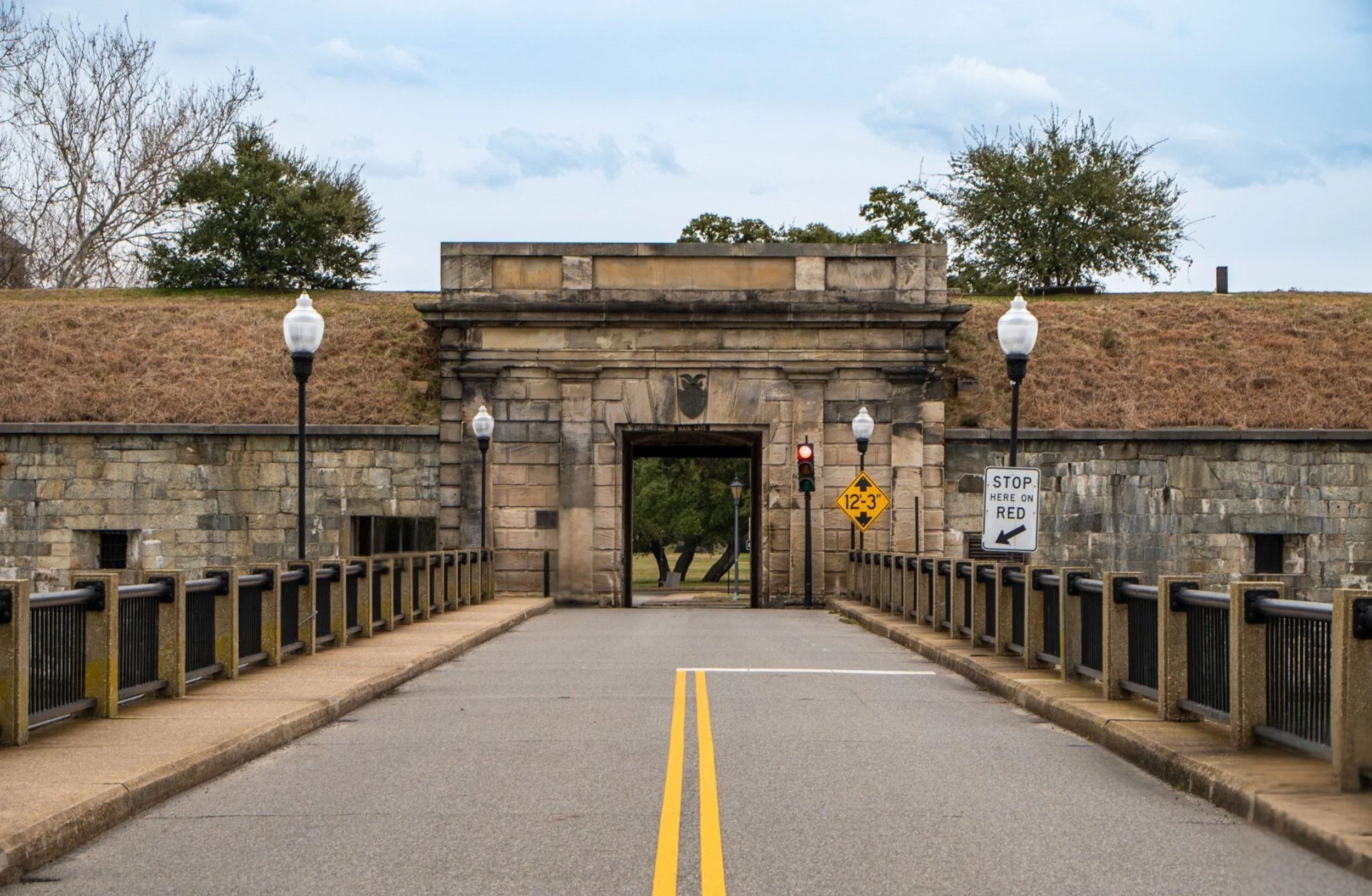
Stop #8 Main Gate
Constructed in 1823, the Main Gate was one of the fort’s first structures to be completed. It served as the main entrance to the inner fortress; containing a sallyport, stockade, and guardhouse.
Seawall Sights Path
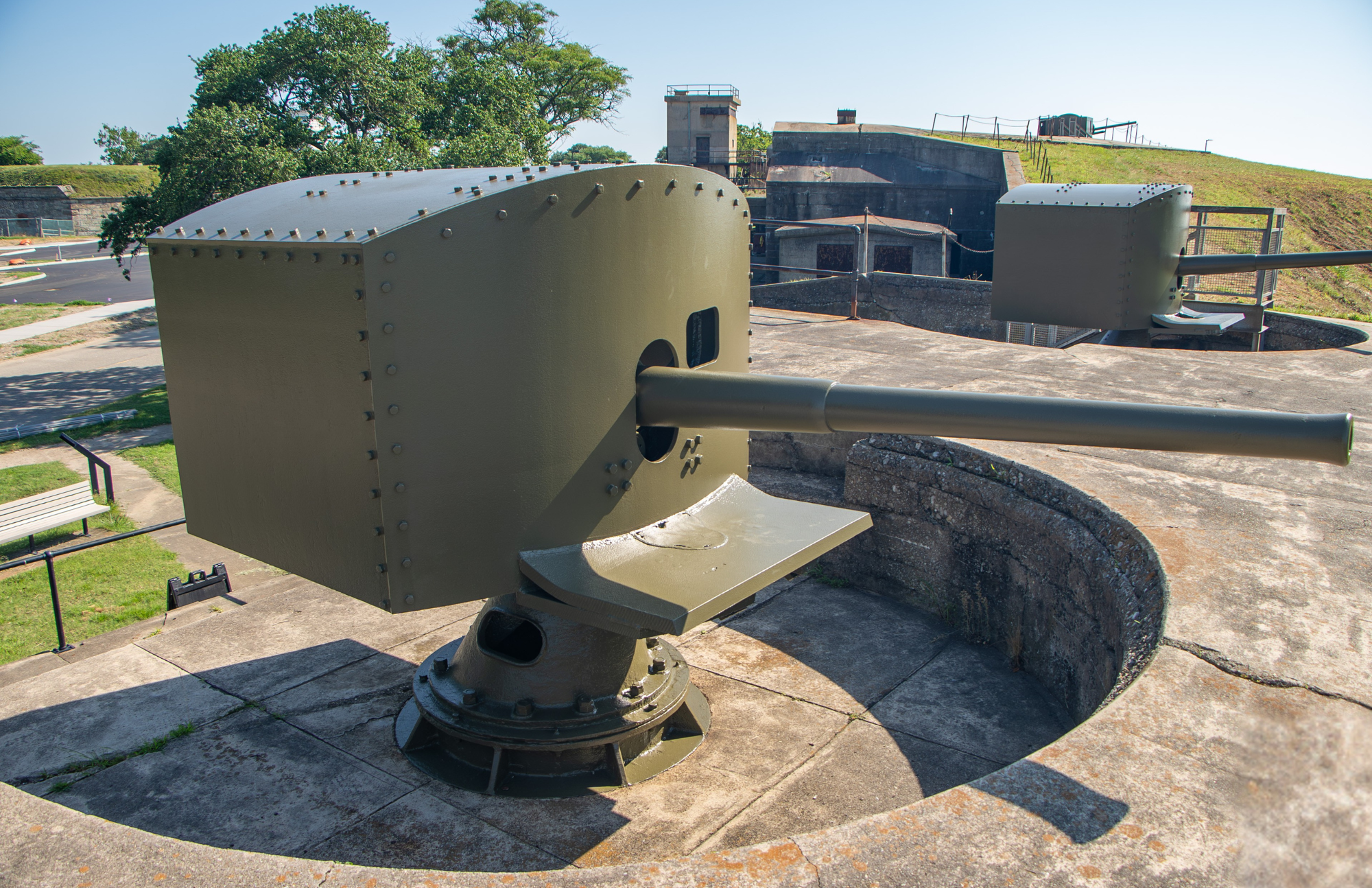
Stop #9 Endicott Era Batteries
The Endicott system was created to attack enemy warships from fortifications not visible from the water. The batteries, of which Fort Monroe has six still standing, were complex and advanced for their day ensuring the fortification and coastal defense of the Chesapeake Bay.
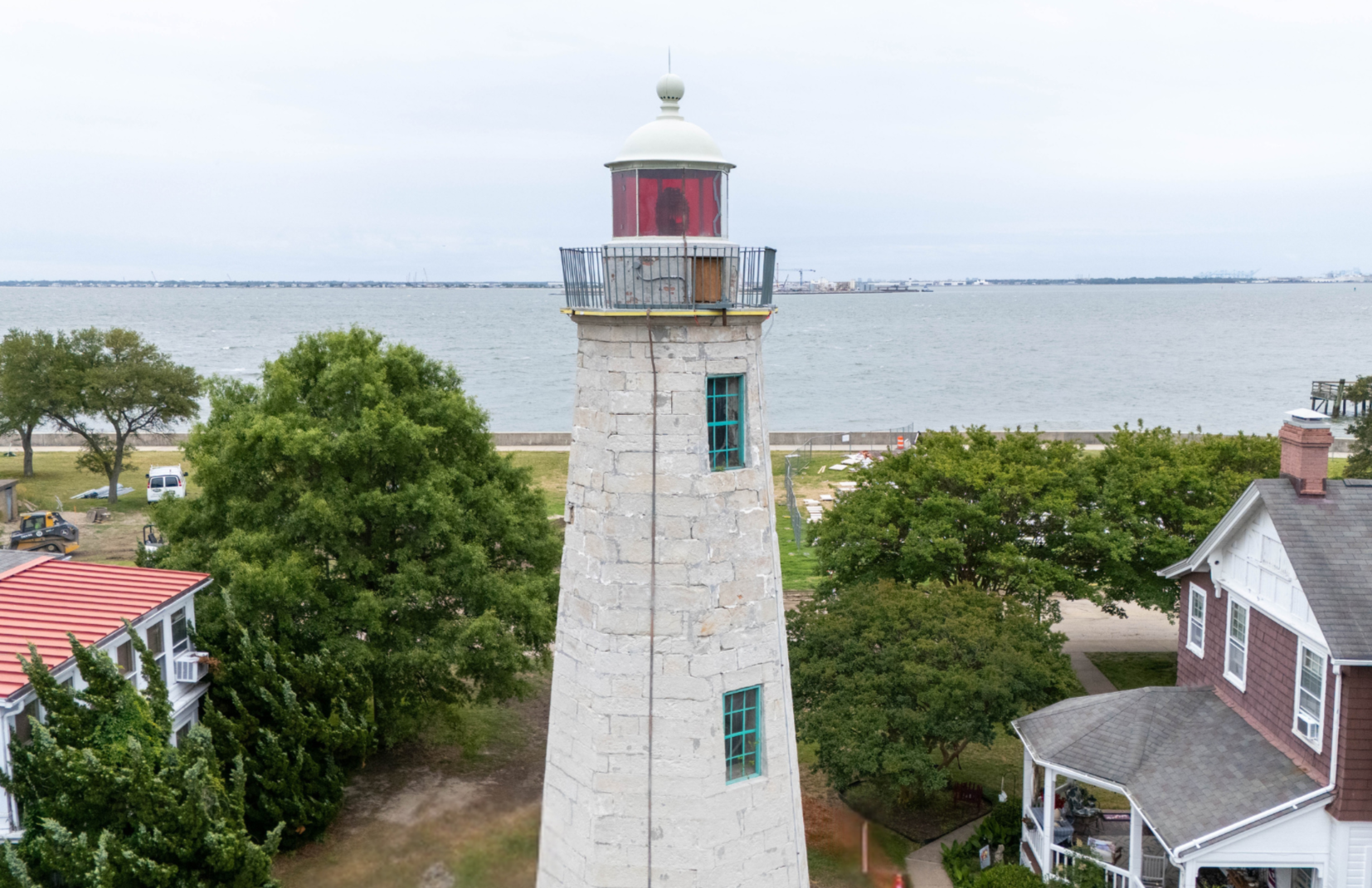
Stop #10 Old Point Comfort Light
Built in 1802, this lighthouse is the oldest structure still standing at Fort Monroe. It was captured by the British and used as an observation tower during the War of 1812. It remains as an active aid to navigation today.
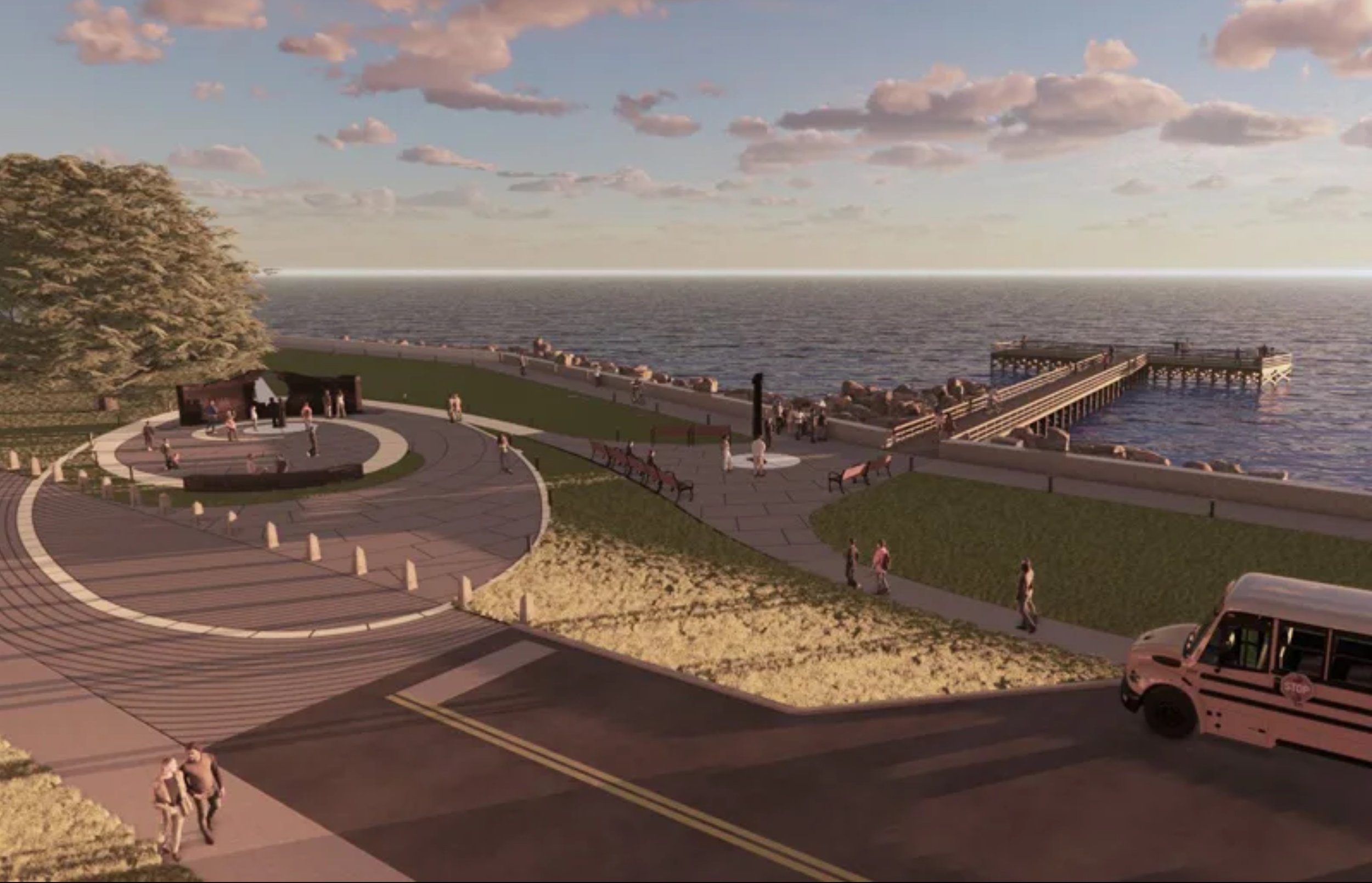
Stop #11 African Landing Memorial Plaza
The Memorial consists of three elements—the Relief, the Arc, and the Figures. The relief will recount the history of the landing of the first enslaved Africans, and be oriented on a direct line of sight to Angola, the homeland of the first Africans.
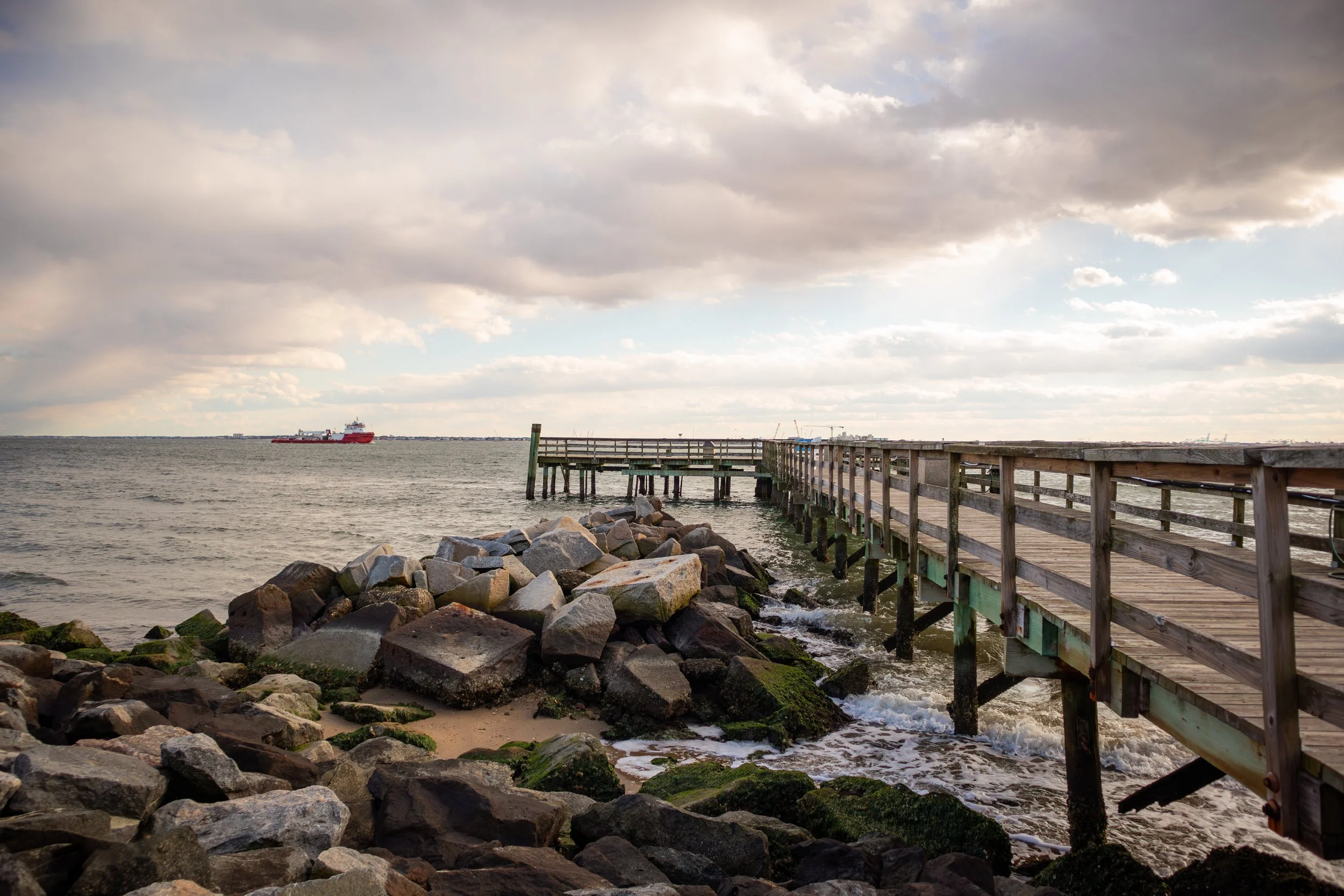
Stop #12 Engineer Wharf
The original wharf was built in 1818 to receive construction materials for the fort. Currently, it is open to the public from dawn until dusk for sightseeing and fishing--a saltwater fishing license is required.
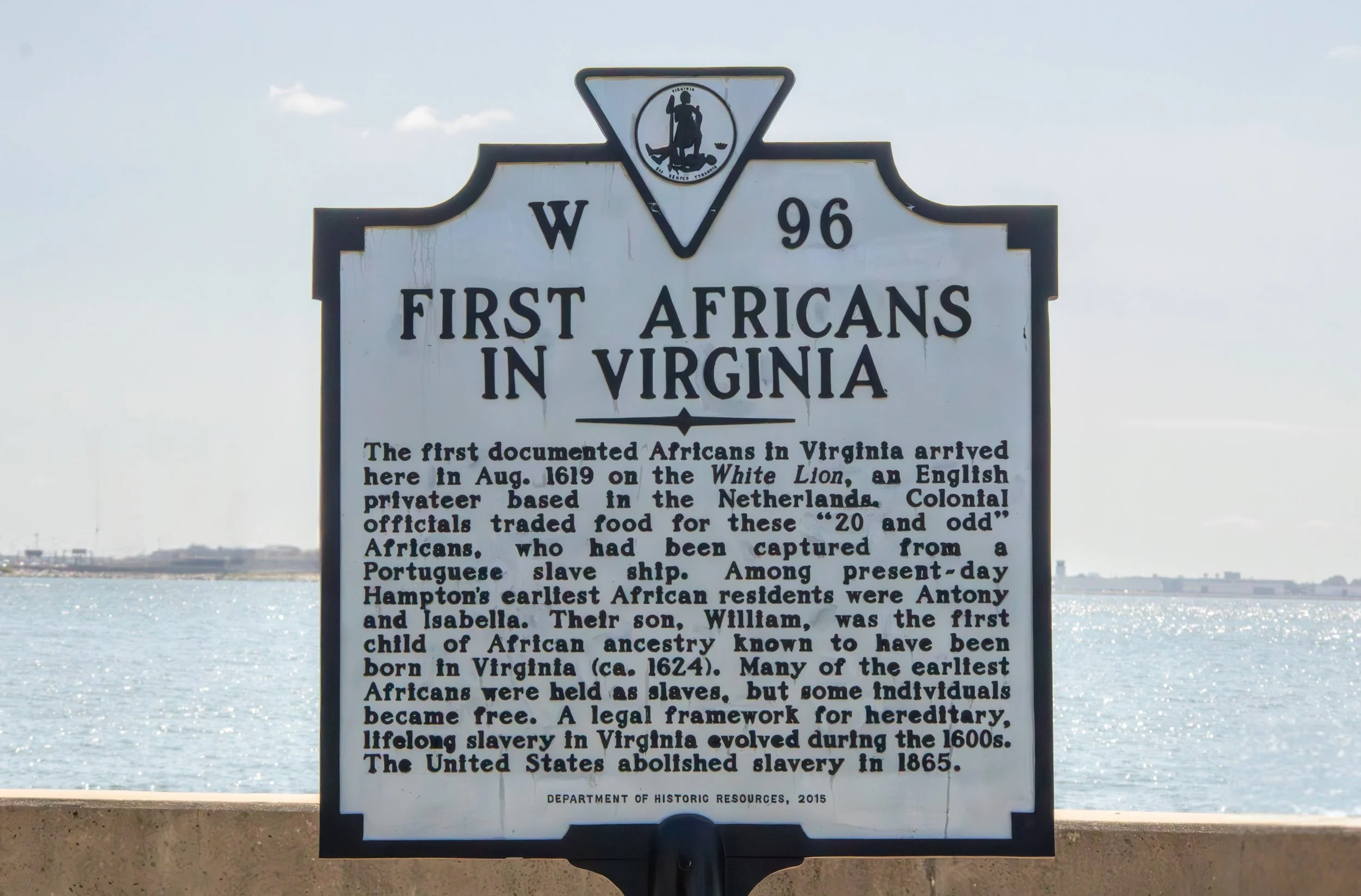
Stop #13 First African Landing Site
In 1619 an English privateer, White Lion, landed near this site carrying over 30 enslaved Africans, who were traded for supplies. The Africans’ knowledge and skills ensured the survival and growth of the Virginia colony. Their arrival signaled the beginning of the evolution of race-based slavery in what would become the United States.
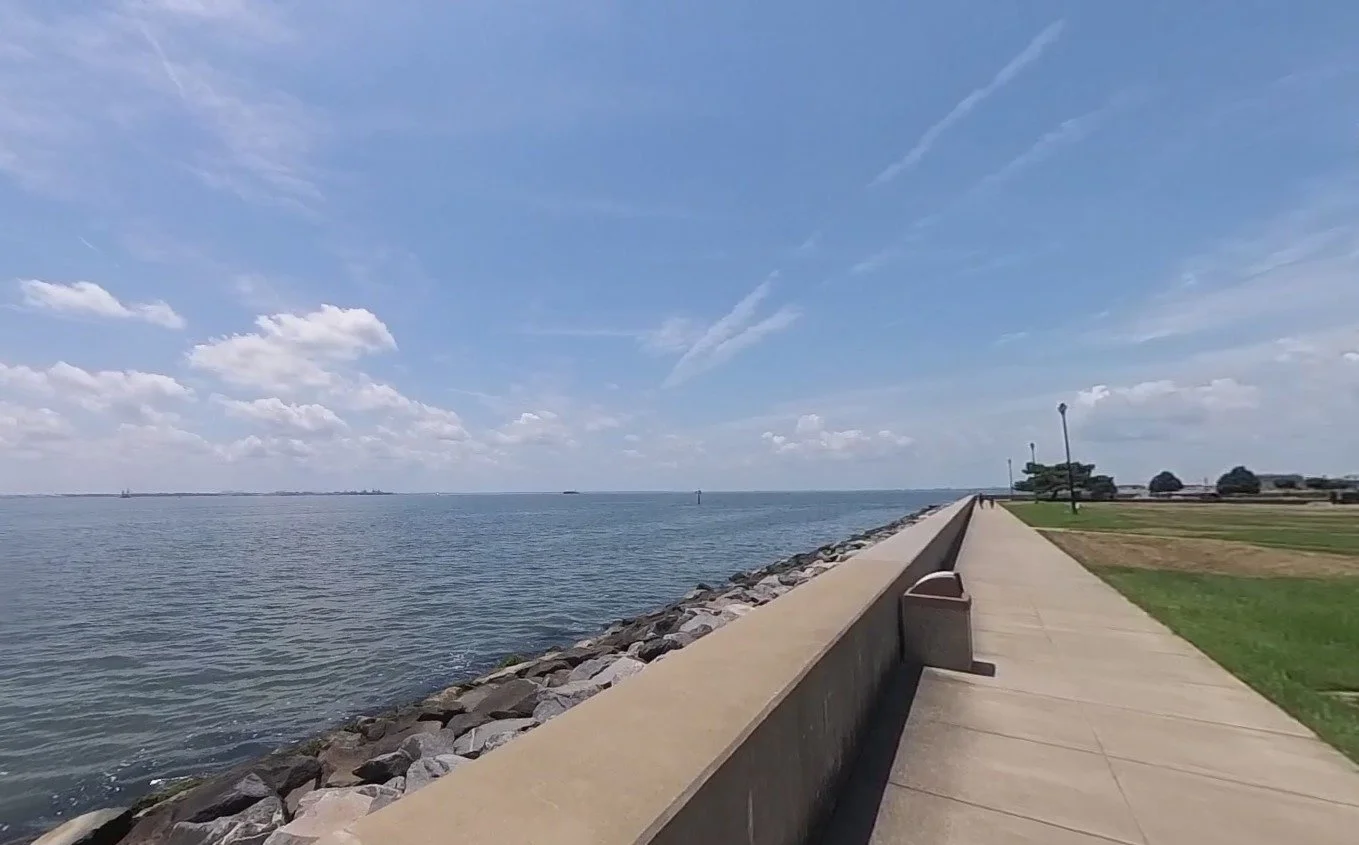
Stop #14 Tsenacommacah
Densely Inhabited Land: This land has always been important to Indigenous tribes such as the Kikotan and the Powhatan Paramount Chiefdom. Indigenous peoples have inhabited Tsenacommacah for over 20,000 years; managing natural resources, allowing access to navigable waterways and providing a strategic military position throughout time.
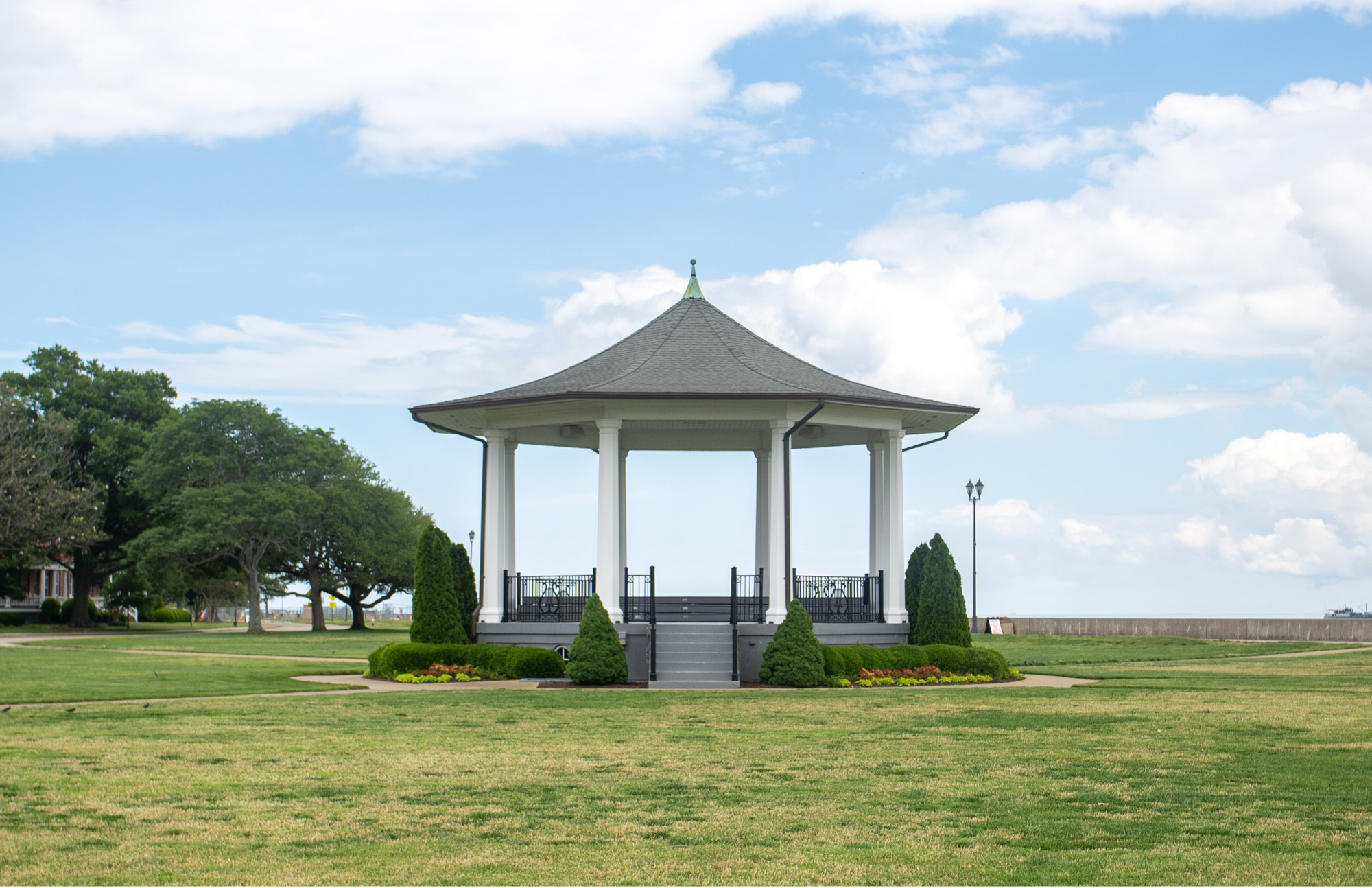
Stop #15 Bandstand At Continental Park
Built in 1934 by African American laborers in the Civilian Conservation Corps and Work Progress Administration laborers, the Bandstand, located in Continental Park, was originally designed for the 40-member, Second Coast Artillery Band.
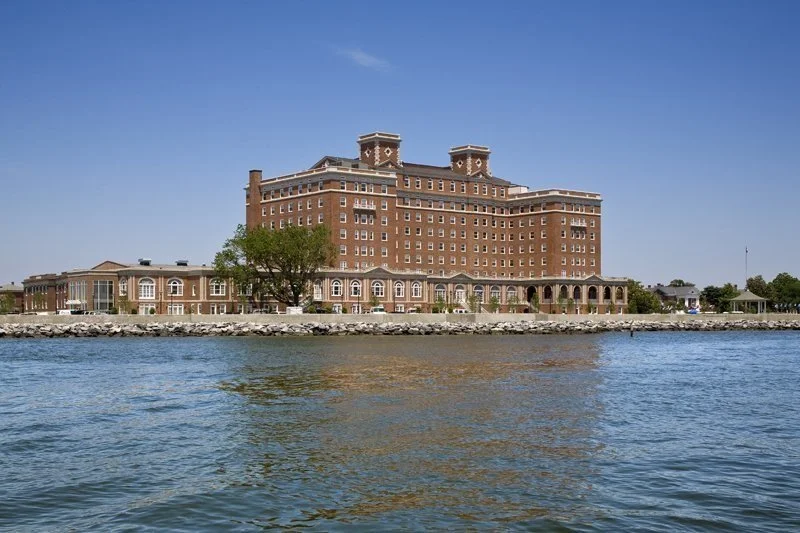
Stop #16 Chamberlin
Constructed in 1928, this building replaced the original 1896 Chamberlin Hotel, which was destroyed by a fire in 1920. Two cupolas sat at the top but were removed at the start of World War II for air defense of the property. Today, it is a private senior living community.
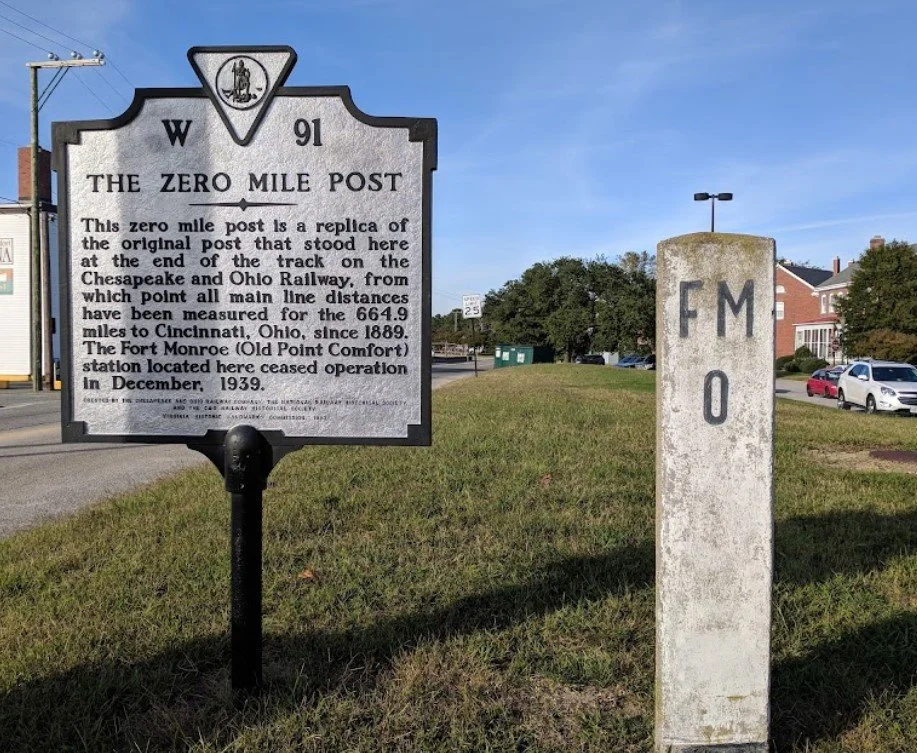
Stop #17 C&O Railroad
From 1889 to 1939 trains ran along the 664-mile railroad, from this site at the mouth of the Chesapeake to Cincinnati, OH carrying freight and passengers. From Milepost 0, people and goods could be connected to other cities, such as Baltimore, MD and New York, NY.
Historic Village Path
Stop #18 St. Mary Star of the Sea
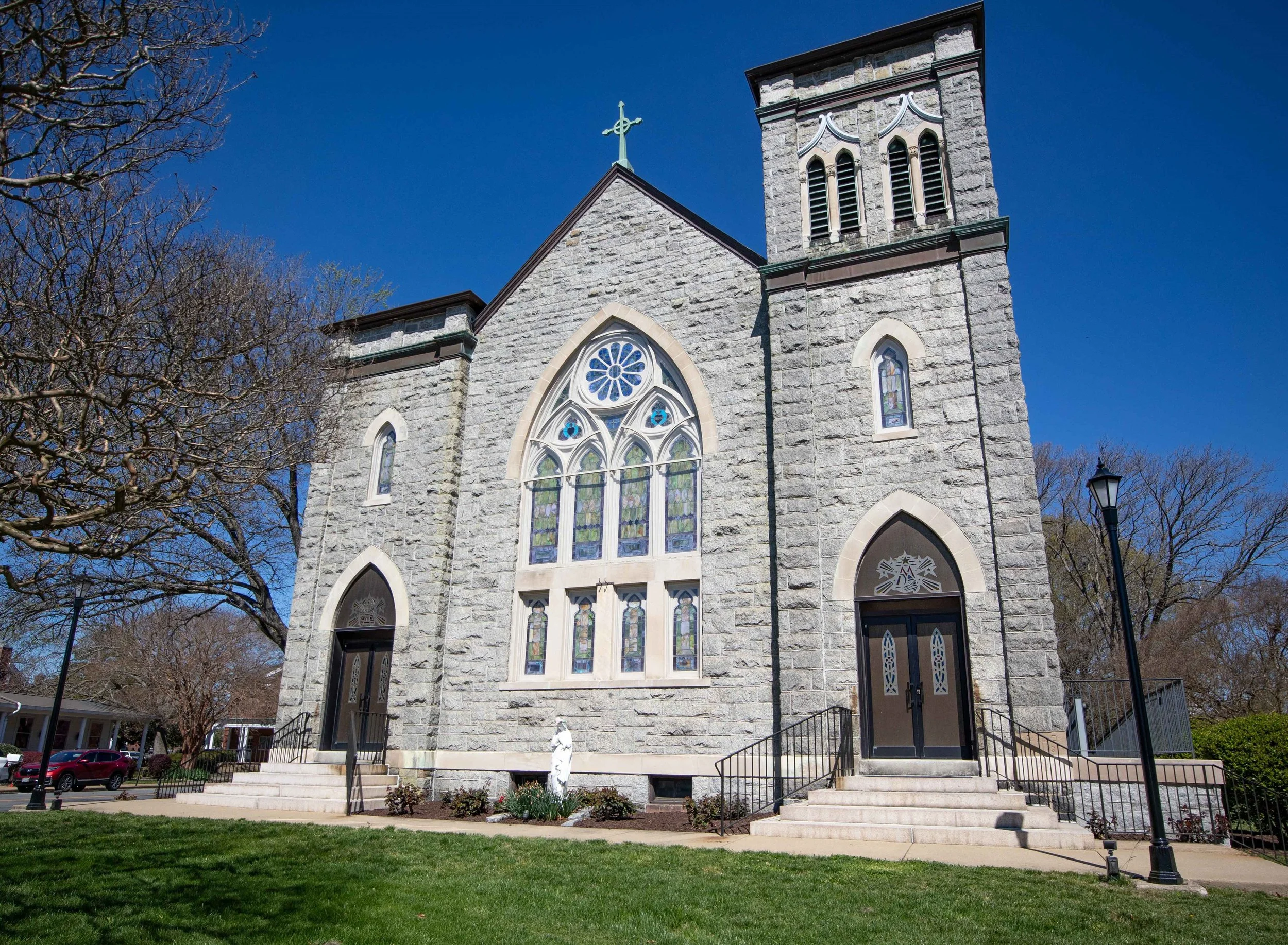
In 1860 the Army authorized the building of a Catholic church on the fort. The original wooden structure was restricted in height so as not to interfere with the artillery range. The current structure was built in 1903.
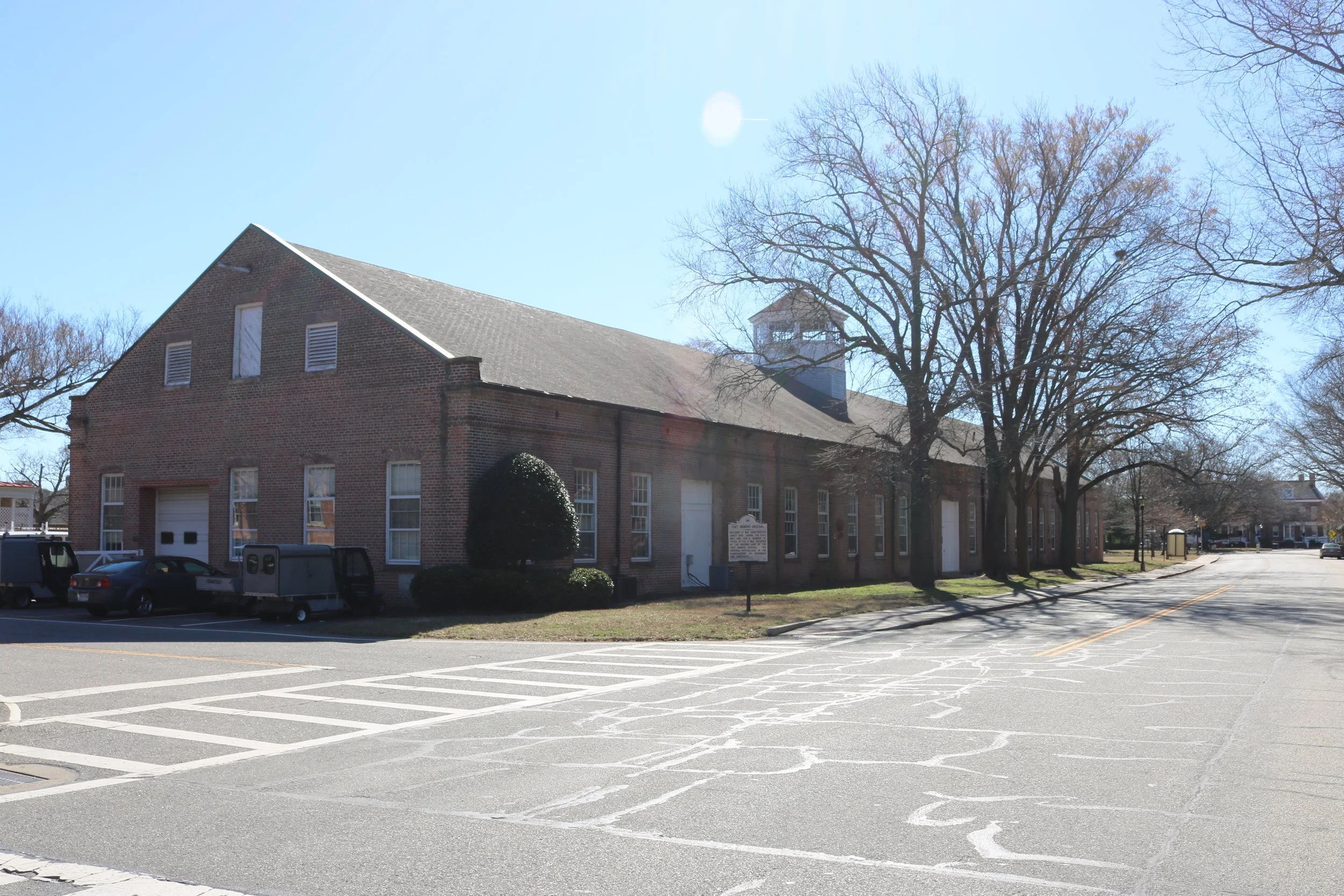
Stop #19 Fort Monroe Arsenal
The Fort Monroe Arsenal, formally established in 1853, developed out of the Ordnance Office of the Artillery School of Practice in 1824 and Ordnance Depot in 1835. It had a large training mission particularly in the nomenclature and construction of artillery equipment. The Fort Monroe Arsenal consisted of a multitude of workshops, storehouses, yards, etc. inside and outside the fort walls. The primary purpose of this building, the Ordnance Workshop, was to produce seacoast gun carriages.
Stop #20 Contraband Quarters Site
During the Civil War, freedom seekers sought refuge at Fort Monroe. The influx of thousands of enslaved people, known as “Contrabands” led to the creation of several housing quarters or camps. The Army provided basic needs for a short time until the American Missionary Association stepped in to support the larger community.
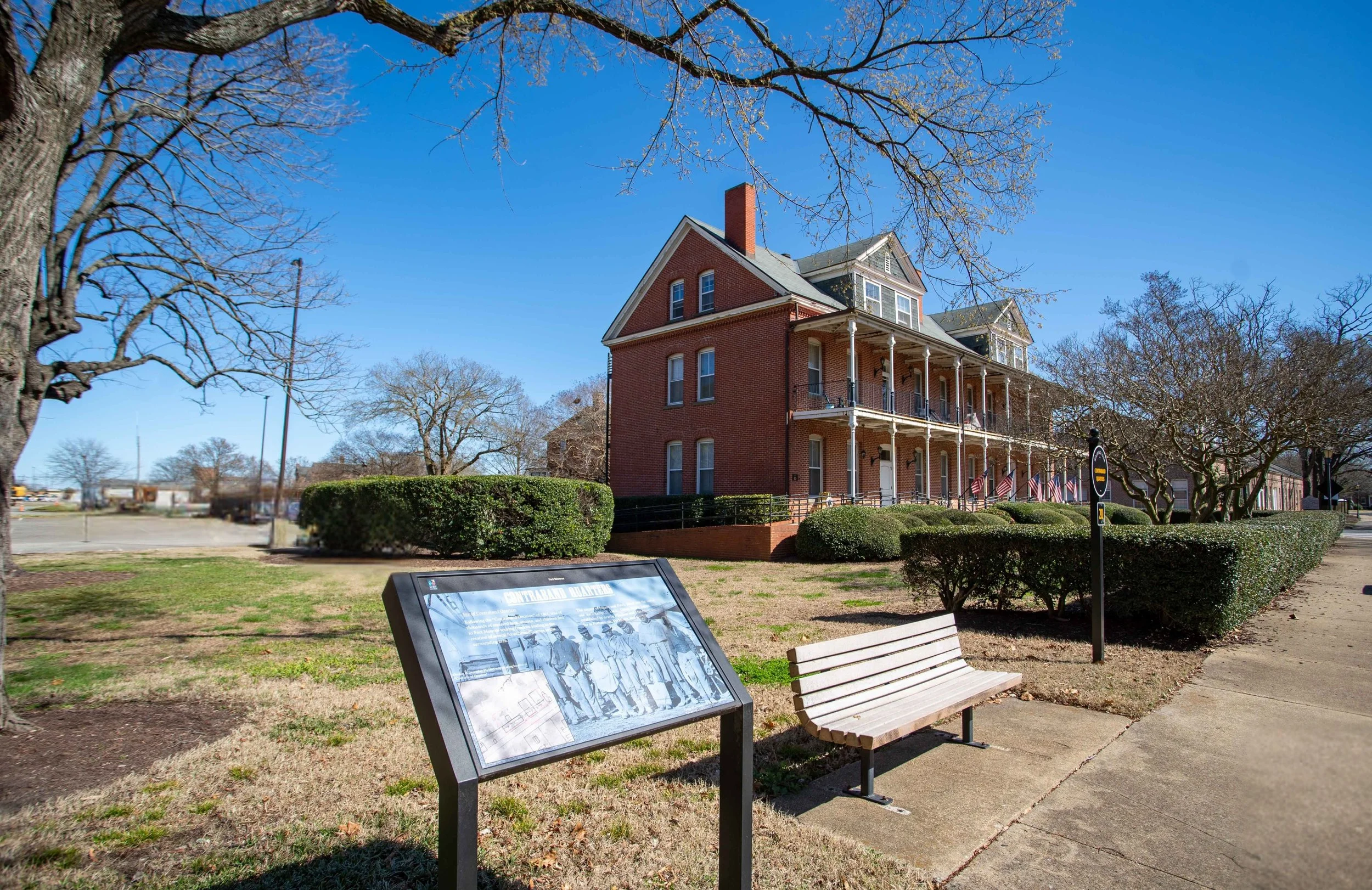
Stop #21 Contraband Hospital Site
A hospital was constructed in 1863 to treat the formerly enslaved people residing at Fort Monroe. Under a request by the U.S. Sanitation Commission to inspect the standards of the area Contraband hospitals, Harriet Tubman visited this site in the summer of 1865.